The Real Crooked Sticks
GOD draws straight lines with crooked sticks. Celebrate the faithful forgotten: Washington, Reeves, Taylor, and the unnamed multitude who built lasting legacies.

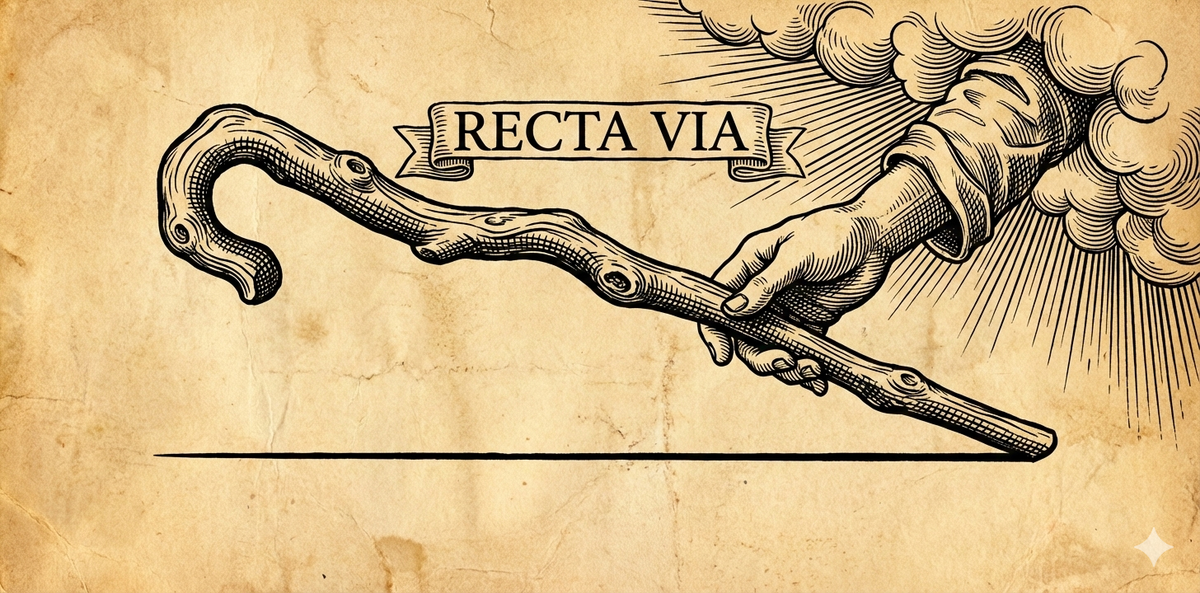
GOD draws straight lines with crooked sticks.
It's one of those observations that sounds almost trite until you sit with it long enough to feel its weight. The Almighty doesn't require perfection in His instruments, a fortunate thing for all of us, since perfection is beyond our ability to offer. But there's a crucial qualifier embedded in that metaphor: the stick must be in His hand. Yes, Providence uses flawed people, but there's a world of difference between a broken clock that's occasionally right by accident and a crooked stick that GOD deliberately wields despite its imperfections.
As I explored in Broken Clocks & Crooked Sticks, that distinction matters more than we often admit. And nowhere does it matter more than when we're deciding which historical figures deserve celebration, which stories deserve preservation, and which legacies deserve the cultural capital we're so eager to bestow.
So let's talk about the real crooked sticks—the men and women who eagerly surrendered to GOD's handiwork, who built institutions that lasted, who raised families that endured, and who showed up faithfully even when history wasn't actively recording them. These are the figures Black History Month was meant to celebrate before it became a month-long exercise in political virtue signaling. The heroes we forgot while busily canonizing a theological fraud.
The Institution Builder
Booker T. Washington wasn't perfect. Let's establish that upfront because I'm not in the hagiography business. The man had his flaws, his compromises, his moments of questionable judgment. But here's what he also had: Tuskegee Institute. An actual institution that trained thousands of young black Americans in practical skills that could support families and build communities. He emphasized self-reliance over grievance, economic development over political agitation, and character formation over rights claims.
Was he perfect? No. Was he a crooked stick? Absolutely. Did GOD use him to draw straight lines through Reconstruction-era chaos? The generations of graduates who built businesses, founded schools, and anchored communities across the South would suggest He did. Washington understood something profound: freedom without capacity is just a different kind of bondage. You can't eat a vote. You can't house your family with a protest sign. And you can't build generational wealth on the foundation of perpetual victimhood.
The modern left despises Washington precisely because his approach worked without requiring their permanent management. He built something sustainable that didn't need progressive oversight to function. That's an unforgivable sin in contemporary race politics, which requires permanent dependency for its own survival.
The Forgotten Faithful
Let me introduce you to some names you've probably never heard (which is precisely the problem).
Robert Robinson Taylor graduated from MIT in 1892, the first black student to do so. He went on to become an architect, designing buildings that still stand today. His story isn't convenient for the narrative that America is irredeemably racist, so it gets buried.
Mathias de Sousa was elected to Maryland's colonial assembly in 1641—in 1641—making him likely the first black elected official in what would become the United States. That's nearly a century and a half before the Revolution. But teaching that might complicate the "America was founded on slavery" talking points, so it's conveniently forgotten.
Bass Reeves served as a U.S. Deputy Marshal in the Indian Territory for over three decades, arresting more than 3,000 felons and killing 14 outlaws in self-defense. He was a free black man with authority in the 1870s American West, enforcing federal law with remarkable effectiveness. His story inspired the Lone Ranger character, though Hollywood couldn't be bothered to acknowledge the black man who actually lived the life they fictionalized for white audiences.
These men weren't victims. They were builders. They saw opportunity where others saw only obstacles. They refused to accept the limitations others tried to impose on them. And they succeeded not because society rolled out red carpets but because they were too stubborn to accept failure as inevitable.
The Church That Was
Before the Great Society destroyed what Reconstruction had begun to build, the black church in America was something magnificent. Not the liberation theology circus it became in the late 20th century—I'm talking about the actual church, the one that preceded the liberal theological takeover. These were congregations that took Scripture seriously, that preached sin and redemption without apology, that understood Christianity as spiritual transformation rather than political activism.
These churches were community anchors in the truest sense. They provided moral formation, not just social services. They taught responsibility alongside rights. They emphasized character over credentials. And they did it all while maintaining theological orthodoxy that would make modern progressive Christians squirm in their postmodern perches.
The pastors of these churches weren't "prophetic voices" in the sense that term is used today—prophetic as in "agreeing with whatever progressive political agenda is currently fashionable." They were prophetic in the biblical sense: calling people to repentance, proclaiming GOD's sovereignty, and refusing to baptize political movements with Christian vocabulary. They knew the difference between the Kingdom of GOD and the kingdoms of this world, and they didn't confuse the two.
That tradition produced men and women of remarkable faith and resilience. It created stable families and thriving communities. And then the Great Society came along and systematically dismantled it all, replacing fathers with welfare checks and churches with government programs. We've spent the last sixty years dealing with the wreckage.
The Unnamed Multitude
But here's the truth that no month-long celebration can adequately capture: the real crooked sticks weren't the famous names. They were the unnamed multitude—the millions of formerly enslaved people who walked off plantations with nothing and built lives anyway. The mothers who held families together through Reconstruction and Jim Crow. The fathers who showed up day after grinding day to provide for children they'd never even met until emancipation. The couples who stayed married despite everything working against them, who raised children in two-parent homes when the culture offered every excuse not to, who passed down faith and character when society encouraged grievance and rage.
These people don't get their faces on stamps. They don't have holidays named after them or get quoted in university courses or featured in documentaries. But they are the ones who actually did the work of building black America from the ruins of slavery. They're the ones who deserve honor, not because they were perfect but because they were faithful.
They were crooked sticks, every one of them. Flawed. Broken in places. Marked by the evil done to them, against them, and in some cases, by them. But they were in GOD's hand. And through them—through their stubborn faithfulness, their refusal to be defined by their circumstances, their commitment to building rather than burning—GOD drew straight lines that lasted for generations.
The Lines We've Drawn Instead
Compare that legacy to what we've chosen to celebrate instead.
We've elevated a man who denied the virgin birth, the bodily resurrection, the deity of Christ, and substitutionary atonement—the very tenets of Christian orthodoxy—while presenting him as a Christian hero. We've canonized a movement built on socialist principles and Marxist frameworks while pretending it was fundamentally Christian. We've allowed racial grievance to trump theological fidelity, all the while convincing ourselves the political ends justify theological means, and ultimately sacrificing truth on the altar of racial credibility.
And the broken clock is still just accidentally right twice a day while we pretend it keeps perfect time.
The irony would be hilarious if the stakes weren't so high. We've taken the actual crooked sticks—the faithful men and women who built institutions, raised families, and modeled faith through impossible circumstances—and we've shoved them to the margins of memory. Meanwhile, we've canonized precisely the kinds of figures they would have warned their children about.
Conclusion: Drawing Better Lines
Black History Month happens every February, and it'll come around again this year like clockwork. The cultural machine will churn out the same sanitized narratives, the same deified figures, the same carefully curated stories designed to serve contemporary political agendas. And most Christians—black and white alike—will go along with it because challenging the narrative just feels too costly.
But here's what I'd ask: what if we chose differently this year? What if we celebrated Booker T. Washington's vision of economic self-sufficiency instead of perpetual victimhood? What if we honored the pre-liberal black church's theological orthodoxy instead of liberation theology's political activism? What if we remembered the names nobody taught us—Taylor, de Sousa, Reeves—and taught them to our children? What if we recognized the unnamed faithful who actually built something lasting instead of elevating those who tore things down in the name of progress and false notions of justice?
GOD draws straight lines with crooked sticks. But the sticks must be in His hand. They must be willing instruments of His providence, not accidental truth-tellers whose brokenness occasionally aligns with reality. They must be faithful, not just famous.
The real crooked sticks are still out there, still building, still faithful, still largely overlooked. Their efforts deserve better than a month of virtue signaling. They deserve the honor we've misplaced on that of theological frauds and political heroes. Their stories deserve to be told to the next generation as examples of what faithfulness looks like in the face of real oppression, real hardship, and real injustice.
They were crooked sticks, every one. But they were in GOD's hand. And that made all the difference.