Failed Heroes: Martin Luther King and the Hagiography Trap
When conservatives canonize flawed heroes for racial credibility, who wins? A theological and moral reckoning with MLK's disqualifying failures.

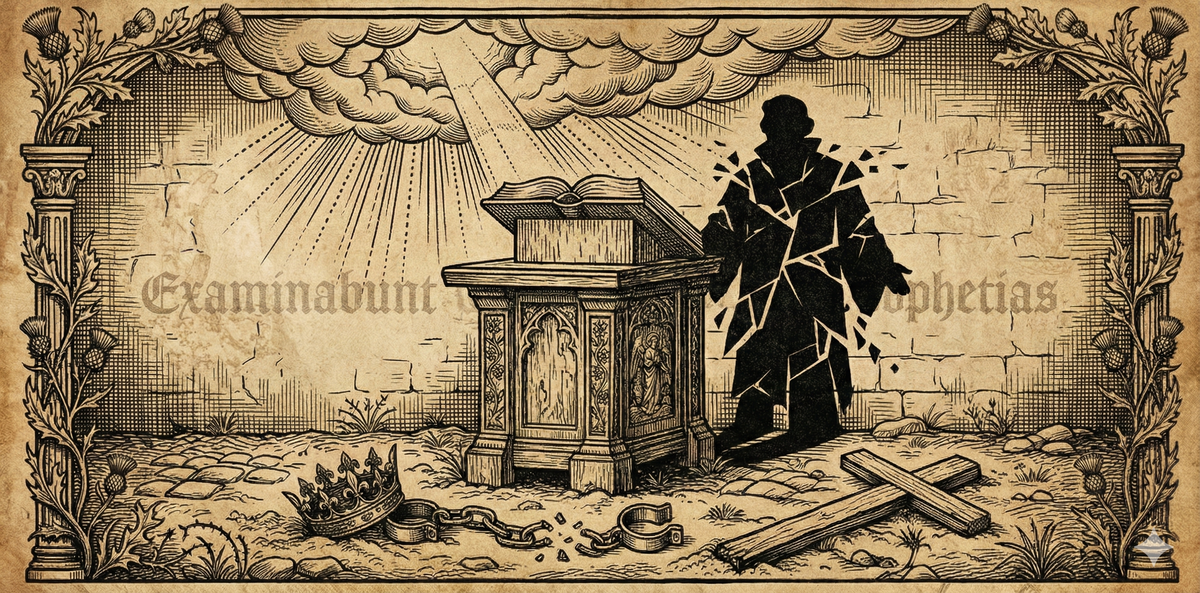
"Even people like Gandhi and Mother Teresa and Martin Luther King, Jr. had their dark sides."
True enough. But try saying that about MLK specifically, and watch what happens. White conservatives will call you divisive. Black progressives will call you a traitor—or worse, "skinfolk but not kinfolk," that delightful little epithet popularized by left-leaning national newscasters and lately weaponized by the likes of Jasmine Crockett. Translation: you might share my melanin, but you've forfeited your tribal membership card by refusing to toe the party line.
The hagiography is enforced from both directions. White America isn't allowed to question MLK without being called racist. Black America isn't allowed to question him without being called a race traitor. The result? Exactly zero room for honest evaluation. And when you can't evaluate a man honestly, you can't learn from him honestly either—neither from his genuine contributions nor from his catastrophic failures.
So what happens when the hero we're culturally required to celebrate doesn't measure up? Not in small ways—we all have "feet of clay," as the old saying goes—but in fundamental, disqualifying ways? What do we do when the saint we've canonized for secular purposes turns out to have preached a false gospel, lived a double life, and built a movement on foundations we'd reject in any other context?
The best of men are men at best: a truth worth remembering. But some men aren't even that. And pretending otherwise doesn't honor anyone—least of all the "black" church, which needs better heroes than the one we celebrate every January.
The Price of Racial Absolution
Here's the pattern, and it's worth tracing carefully because we keep falling for it.
In the 1960s and '70s, conservatives opposed MLK. William F. Buckley stressed his socialist opinions and communist associations. Will Herberg, writing for National Review, called him a "Marxist radical pretending to be a Christian." When the MLK holiday came up for vote in 1983, a majority of Americans opposed it. Republican senators and congressmen dwelled on King's ties to communist advisors and documented sexual escapades. Reagan himself nearly vetoed it, expressing reservations that had to be overcome for the sake of "racial reconciliation."
Then something shifted. By the late 1980s, Christianity Today began publishing what can only be described as hagiographic retrospectives. Chester Finn, Reagan's chief educational advisor, outlined a patriotic calendar built largely around King. Through the 1990s, conservative politicians who once opposed the holiday became its champions—Newt Gingrich and Jack Kemp sponsored celebrations, Bill Bennett and Harry Jaffa exalted King as the incarnation of the American conservative ideal. Fast forward to 2018: The Gospel Coalition hosts MLK50 conferences with big-name evangelical speakers treating him as an exemplary Christian leader. By 2019, the Anglican Church adds him to their liturgical calendar as "Reformer of Society."
Notice what happened? We didn't get new information that changed the calculus. The FBI files didn't suddenly prove he was orthodox after all. The seminary papers didn't get revised. What changed was our willingness to overlook what we knew—to purchase racial credibility at the cost of intellectual honesty.
Whites held no monopoly on truth in the '50s. Neither do blacks hold a monopoly today. But somehow we've decided that acknowledging MLK's failures means you're endorsing Jim Crow. That pointing out theological error makes you racist. That applying biblical standards to a man who claimed to be a Christian minister is somehow beyond the pale.
Dear white people: lose the guilt, it's not your fault. But you won't lose it, will you? Instead, you canonize a deeply flawed man to prove you're not racist. You baptize his legacy to assuage your discomfort. You pretend the normal rules don't apply because the alternative is just too uncomfortable - or costly.
Here's the con, and you need to see it clearly: We're all being played. Hard. Race hustlers know this works. They know conservatives will capitulate for racial credibility. They know many of us will abandon our stated principles about character and theology the moment the opportunity for virtue signaling presents itself. And too many of us (black folk & conservatives) keep proving them right.
Remember 'skinfolk but not kinfolk'? That's not just an insult—it's a loyalty test. A rhetorical fence to keep black voices from straying off the plantation.
And yes, "plantation" is the right word. Louisiana State Senator Elbert Guillory captured it perfectly in his 2013 video: "Please join with me in abandoning the government plantation and the party of disappointment." The metaphor isn't hyperbole. The control mechanism is identical: keep people dependent, keep them voting right, keep them from thinking independently.
Here's the thing: white conservatives, terrified of being called racist, won't defend black dissenters when the left deploys this weapon. So the trap closes from both sides. The hagiography continues. And nobody learns anything.
When Character Actually Mattered
Let's talk about what we know, not what we suspect.
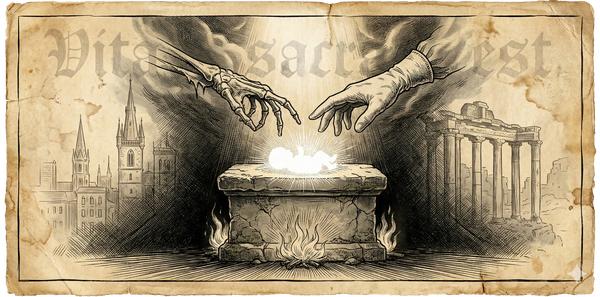
The FBI surveilled MLK from 1963 until his death in 1968. The recordings documented serial adultery—multiple hotel room encounters, confirmed by associates like Andrew Young and Bayard Rustin who verified the transcripts were accurate. In November 1964, the FBI sent an anonymous package to King's home with recordings and a letter that can only be described as a suicide solicitation. Most of the surveillance transcripts remain sealed by court order until 2027, but what we already know is damning enough.
Now, let's be clear about two things. First, J. Edgar Hoover had a vendetta, and the FBI's motives were corrupt. That doesn't make the evidence fabricated—King's own associates confirmed its accuracy. Second, and more importantly, these failures aren't disqualifying because the FBI said so. They're disqualifying because Scripture says so.
First Timothy 3 and Titus 1 lay out qualifications for church leadership. "Above reproach" isn't a suggestion. "Husband of one wife" isn't negotiable. The man who stands behind a pulpit claiming to speak for God must meet a biblical standard. King didn't. By any measure spelled out in Scripture, he would have been disqualified from eldership.
I can already hear the objection: "But what about David? What about Moses?"
You're right. David committed adultery and murder. Moses struck the rock in anger. Both faced severe consequences and their legacies were significantly tarnished as a result. But here's the distinction we keep missing: we don't celebrate David because of Bathsheba. We don't honor Moses despite striking the rock—that sin cost him the Promised Land. His disqualification stands in Scripture as a warning, not an asterisk we politely ignore.
Yet here we are, doing exactly that with King. We've built monuments, named streets, established a federal holiday—all while knowing he failed to meet the biblical standard for leadership and was completely disqualified from Christian leadership. We've decided that because challenging his character feels uncomfortable—because it might give "ammunition to racists"—we will politely ignore his major asterisks. The standard changed. Why? Because we're more afraid of being called racist than we are of spiritual compromise.
Act out your intelligence, not your ethnicity. Stop pretending character doesn't matter when it's inconvenient. Stop making excuses you'd never make for anyone else.
The Reverend Who Wasn't
But here's where it gets worse, because the moral failures are actually secondary. The theological catastrophe is primary.
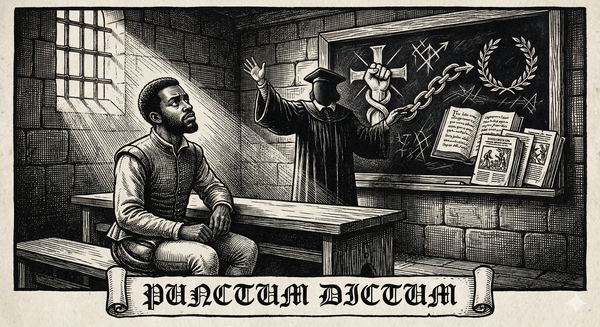
Martin Luther King Jr. denied the virgin birth. He called it "unscientific and untenable" in his seminary papers at Crozer Theological Seminary. He denied the bodily resurrection of Christ—a position he held from age thirteen and never repudiated. He denied the deity of Christ, writing in his Boston University dissertation that "the orthodox view of the divinity of Christ is in my mind quite readily denied." He rejected substitutionary atonement. He embraced the theological liberalism of Walter Rauschenbusch and the social gospel movement that subordinates personal salvation to societal transformation.
These aren't minor theological quibbles. These are the load-bearing walls of Christian orthodoxy. A man who stands in Christian pulpits proclaiming a false Christ and a false gospel is not a model for Christian emulation—regardless of his civic contributions.
Second Corinthians 11:3-4 warns about those who preach "another Jesus" and "a different gospel." Galatians 1:8-9 pronounces anathema—a strong curse—on those who preach a gospel contrary to what was delivered. First John 4:1-3 tells us to test the spirits, and specifically identifies as antichrist anyone who denies that Jesus Christ has come in the flesh. Bottom line: King's own writings place him squarely outside Christian orthodoxy.
Now here's the category error we keep making: We conflate civic hero with Christian hero. These are not the same thing. We can acknowledge King's contributions to racial justice—and there were real contributions, despite the complications—without baptizing those contributions with Christian vocabulary. We can recognize the good that came from aspects of the civil rights movement without pretending it was a Christian movement led by a Christian man preaching a Christian message.
Because it wasn't. (And here, I could tangentially unpack the socialistic and communistic driving forces behind much of the civil rights movement, but that's for another post.) King preached social justice activism, not the Gospel. He called for societal transformation through political means, not spiritual regeneration through Christ. The ground is level at the cross—but only if you're preaching the actual cross, the one where the God-man died as a substitutionary sacrifice for the sins of His people. King explicitly denied that cross. He rejected that Christ.
It's a pattern we've seen before: too many have decided that niceness, social concern, and platform size matter more than what a man actually believes and teaches about Christ and His Gospel. Joel Osteen built an empire on this principle. Clearly, this same "standard" is also being applied to Martin Luther King Jr.
Fake Christians believe just like real ones until they don't. The test isn't charisma or cultural impact. The test is Christ. Does a man confess Jesus as Lord—truly Lord, fully God, risen bodily, returning in glory? King didn't. Whatever else he was, he wasn't a faithful minister of the Gospel.
The black church deserves better than this. It deserves heroes who actually held to the faith, who preached Christ crucified, who pointed people to the only name under heaven by which we must be saved. Lionizing a man who denied that faith doesn't help anyone. It certainly doesn't help the cause of racial reconciliation, because it's built on a lie.
Breaking the Hagiography Trap
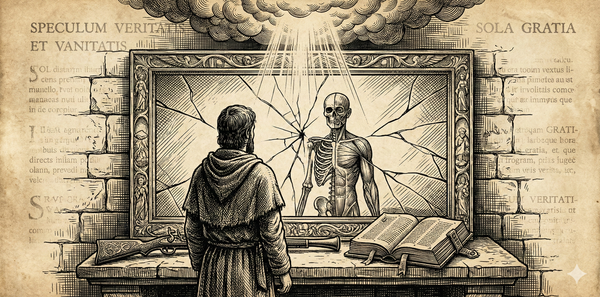
Here's how hagiography works: You elevate a flawed figure beyond criticism. You conflate criticism of the person with rejection of "the cause." You demand tribal loyalty over truth. And then you police the boundaries through social pressure and rhetorical intimidation.
We've been seeing this sort of thing for years now. Question King's theology? You're divisive. Point out his moral failures? You're a race traitor. Suggest the black church had better examples of faithful leadership? You're undermining racial progress.
It's manipulation, pure and simple. And conservatives keep falling for it because we've decided that being liked matters more than being truthful. We've decided that racial credibility—whatever that even means—is worth abandoning our stated commitment to character, theology, and biblical standards.
Black is a thing but it is not the king. Stop making race the trump card. Stop letting fear of accusations determine what you're willing to say. Ignore color and see character—which means evaluating King's character honestly, using the same biblical and intellectual standards we'd apply to anyone else.
The biblical standard is clear: We will know fellow believers by their fruit and by their theology. Both matter. And by both measures, King falls short—tragically short.
Listen, I get it. There's something deeply uncomfortable about this. We want our heroes clean. We want the civil rights movement to have been led by godly men preaching a biblical message. We want to be able to point to King as proof that the black church shaped American history for good. And in some sense, those things are partially true.
But "partially true" isn't good enough when we're talking about the Gospel. "Close enough" doesn't cut it when we're evaluating whether a man faithfully proclaimed Christ. And "socially useful" isn't a substitute for theologically sound.
The best of men are men at best—flawed, fallen, grace-dependent. But there's a difference between godly men with feet of clay and false teachers who deny the Lord. King was the latter. Pretending otherwise dishonors the actual faithful servants—the Booker T. Washingtons, the pre-liberal black church leaders, the unnamed multitudes who held to orthodox faith while building their communities—who deserve the honor we've misplaced on a man who preached 'a different gospel'.
This isn't about diminishing civil rights progress. It's not about endorsing the racism King fought against. It's about intellectual honesty and theological fidelity. It's about refusing to let fear cloud the truth. It's about insisting that if we're going to honor someone as a Christian leader, he should have actually been, you know...Christian.
If you're convinced you're a victim then you are your own victimizer. And if you're convinced you need King to be a saint to validate the cause of racial justice, you've already lost the argument. The truth doesn't need false heroes. Justice doesn't require theological compromise. And the black church deserves better than being told its only representative to the broader culture was a man who denied the faith.
The hagiography trap closes when we decide comfort matters more than truth. It opens when we're willing to say: This man did some good. He also did great harm. We can acknowledge both without canonizing either. And we can do better.