Those Who Actually Built
Black history's real heroes weren't agitators demanding recognition. They were builders — inventors, scientists, entrepreneurs — who earned it.

There was a fork in the road for "black culture" that most people never learn about, and it may be the single most consequential turning point in so-called black American history.
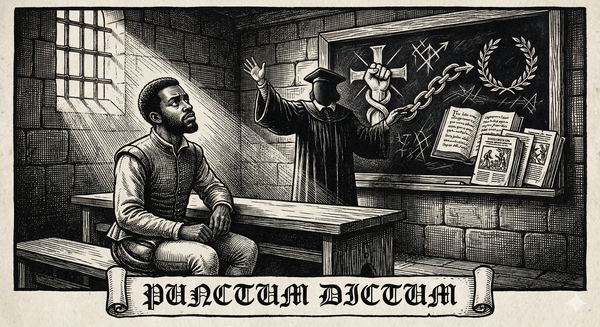
It wasn't a Supreme Court case or a legislative act. It was a philosophical disagreement between two men: Booker T. Washington and W.E.B. Du Bois. Washington said: build economic capacity first; earn your seat at the table through competence, through the undeniable weight of what you've constructed with your own hands. Du Bois said: agitate for political rights first; demand equality as a precondition, not a reward.
America chose Du Bois.
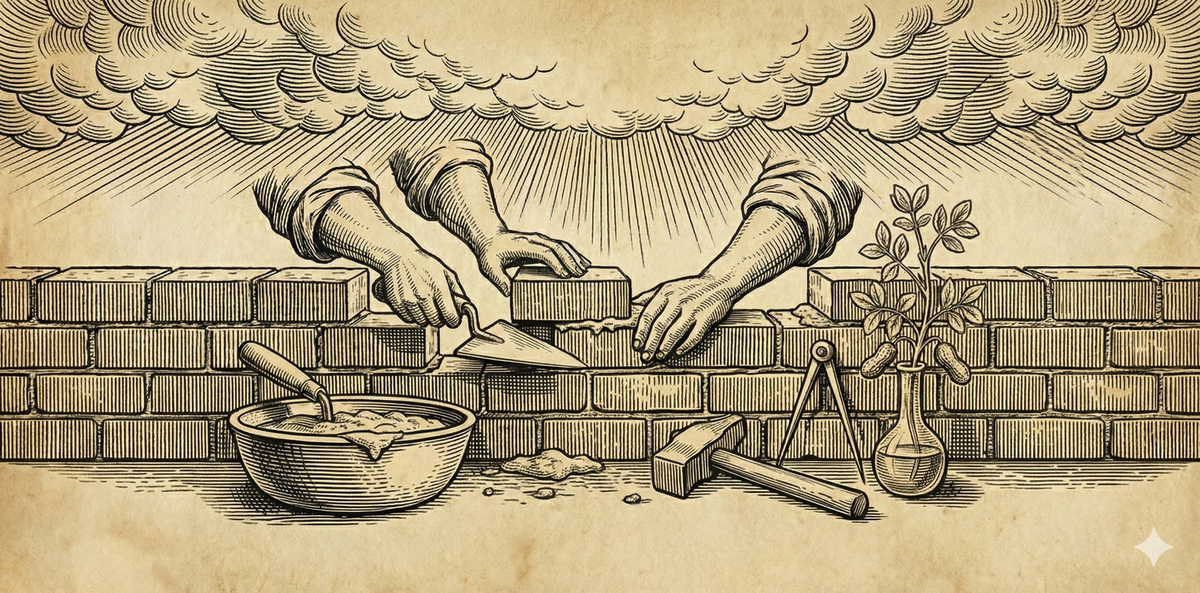
I think that was the wrong turn — or at least mostly wrong. Not because agitating for rights is inherently illegitimate; dismantling Jim Crow required legal confrontation. But because the path of agitation, once chosen, became permanent. It calcified into an industry. The Du Bois trajectory laid the groundwork for a system in which dependence on government replaced dependence on one's own capacity, and in which demanding recognition supplanted the harder, quieter work of earning it. The freedmen who walked out of bondage didn't agitate for reparations; they took what they'd been given and built. They had it right.
But here's what troubles me about the way this debate gets remembered: both Washington and Du Bois are treated as abstractions — philosophical mascots representing "accommodation" or "activism." Meanwhile, the men and women who actually embodied Washington's philosophy — who built things that changed daily life, who worked in laboratories and workshops and factories — are virtually unknown. We celebrate the agitators and forget the builders.
Let's correct that.
GOD's Little Workshop
George Washington Carver was born into slavery around 1864. Kidnapped as an infant alongside his mother, he was recovered but she was not; he never knew her. Raised by his former master's family, he left home at roughly eleven years old to pursue an education, supporting himself through odd jobs for years before eventually earning a master's degree in agricultural science from Iowa State — the only black American with an advanced degree in that field at the time.
Booker T. Washington recruited him to Tuskegee in 1896. Carver stayed for forty-seven years, until his death in 1943. He never left.
That fact alone deserves more attention than it typically receives. Carver was offered positions elsewhere — more lucrative, more prestigious — and turned them all down. He stayed at a small agricultural school in rural Alabama, teaching impoverished farmers how to rotate crops, enrich depleted soil, and grow peanuts and sweet potatoes instead of relying on cotton monoculture. He developed over three hundred products from peanuts alone, though scholars note that many of these remained experimental curiosities rather than commercial successes. His real genius was in agricultural education: he invented a mobile classroom — the Jesup wagon — and drove it from farm to farm, bringing science directly to the people who needed it most.
He called his laboratory "GOD's Little Workshop." Each morning he prayed Scripture before beginning his research: "Open thou mine eyes, that I may behold wondrous things out of thy law." When asked by a congressional committee how he'd learned so much about the peanut, he answered simply: "From an old book." When pressed — "Does the Bible tell about peanuts?" — he replied: "No, sir. But it tells about the GOD who made the peanut. I asked HIM to show me what to do with the peanut, and HE did."
The New York Times criticized him for it in 1924. "Men of Science Never Talk That Way," the headline read. Carver didn't care. He wasn't performing for credentialed elites; he was building for sharecroppers.
Now, as a Reformed thinker, I'm not in the business of endorsing claims about audible conversations with the Almighty. I don't believe GOD speaks to us in the way Pentecostals and charismatics sometimes suggest. But I do believe HE leads, directs, and guides — and that HIS providence is often visible in retrospect, even when the mechanics remain hidden from us in the moment. Carver's life bears the marks of that kind of providential direction: a man who could have pursued wealth or fame, who instead spent nearly half a century in a modest laboratory, crediting the Creator for whatever came out of it. He only filed three patents in his entire career — deliberately, because he wanted his discoveries available to everyone.
He's buried next to Washington at Tuskegee. Two builders, side by side.
The Builders You've Never Heard Of
Carver wasn't alone. There were others — men and women who built things the world still uses, whose names you may never have encountered. Their stories have been alternately inflated by well-meaning mythmakers and ignored by everyone else. Their memories deserve better than such treatments. They deserve the truth.
Granville T. Woods held forty-five verified U.S. patents between 1884 and 1907 — not the sixty-plus often cited, but forty-five is extraordinary by any measure. The black press of his day called him "the greatest electrician in the world," and Edison sued him twice over telegraph patents. Woods won both times. But his story isn't a triumph narrative; he was repeatedly exploited by predatory business partners and spent much of his career in financial difficulty. A brilliant inventor ground down by racial barriers and crooked associates — yet the patents endured. The inventions were real even when the rewards were not.
Lewis Latimer is often credited with "improving Edison's light bulb." The truth is more precise and, I'd argue, more interesting: he patented a manufacturing process for carbon filaments that made mass production of incandescent lighting commercially viable. He didn't improve the bulb itself; he made it possible to build bulbs at scale. He later served as Edison's chief patent strategist — one of the twenty-eight charter members of the Edison Pioneers, and the only black man among them. His contribution was competence applied methodically over decades: draftsman, patent investigator, expert witness, author of the first book on electric lighting. Not glamorous but indispensable.
Jan Ernst Matzeliger invented the automatic shoe-lasting machine — the device that mechanized the most complex step in shoemaking. Others had tried for decades; Matzeliger's was the first that actually worked. The U.S. Patent Office sent an examiner to Massachusetts to verify it in person because the application was too complex to evaluate on paper. Production jumped from fifty pairs a day by skilled hand-lasters to as many as seven hundred. He died of tuberculosis at thirty-six, before the commercial explosion his invention enabled. The patents were absorbed into a monopolistic corporate structure that made fortunes for others. Matzeliger himself held stock but never saw the full return. The machine outlived him; the credit barely did.
Madam C.J. Walker — born Sarah Breedlove on a Louisiana plantation in 1867 — is often called the first female self-made millionaire in America. The honest accounting is slightly different: her personal estate at death was approximately $600,000 to $700,000, though when her company's value is included, the total exceeded a million in 1919 dollars. She didn't invent her hair care formulas (the basic recipes existed in medical texts since the 1700s), and she learned the trade selling another woman's products before starting her own line. But none of that diminishes what she actually did, which was arguably more impressive than the myth: she built a national distribution network, trained thousands of sales agents, and created a business empire through sheer operational brilliance. She was a builder, not an inventor. And the building is what mattered.
What Builders Do
Do you see a man skillful in his work? He will stand before kings; he will not stand before obscure men. — Proverbs 22:29
There's a piece of advice I give my own son: learn the conventions first, then you can break the mold. Don't try reinventing the wheel before you've learned how the wheel works. Build capacity. Bring value. Earn your place at the table before demanding a seat.
I didn't realize until recently how precisely that mirrors Washington's philosophy — not as political strategy but as basic human wisdom. You enter the system you've been placed in, you learn how it works, and you build within it. When the system rewards competence, you reap the reward. When it doesn't — and often it won't, because the system is run by fallen people operating in a fallen world — you keep building anyway, because the building itself has value that outlasts whatever recognition the world withholds.
Carver understood this. Woods and Latimer and Matzeliger and Walker understood this. The freedmen who built schools and businesses from nothing understood this. They didn't wait for permission. They didn't demand recognition as a prerequisite for effort. They worked — and the work spoke for itself, even when no one was listening.
Men of this caliber don't wait for the right conditions; they build in spite of them. The difference between a builder and a complainer is not opportunity but what you do while you're waiting for it.