Black History Is...
Scripture says remarkably little about ethnic distinction. That silence tells us more about "black history" than a thousand February speeches ever could.

We've spent the better part of this month dismantling things. False heritage myths. Performative guilt liturgies. The ghettoization of an entire people's story into twenty-eight days. The ideological machinery that profits from keeping that story separate.
All necessary work. But deconstruction without construction leaves rubble, not a foundation.
So here's the question I've been circling: what does "black history" actually look like when it's rightly understood — not through the lens of grievance politics or Afrocentric mythology or February's performative calendar, but through the lens of Scripture itself?
The answer, it turns out, is startling. Not because of what GOD says about ethnic distinction, but because of how little He actually says.
What Scripture Barely Mentions
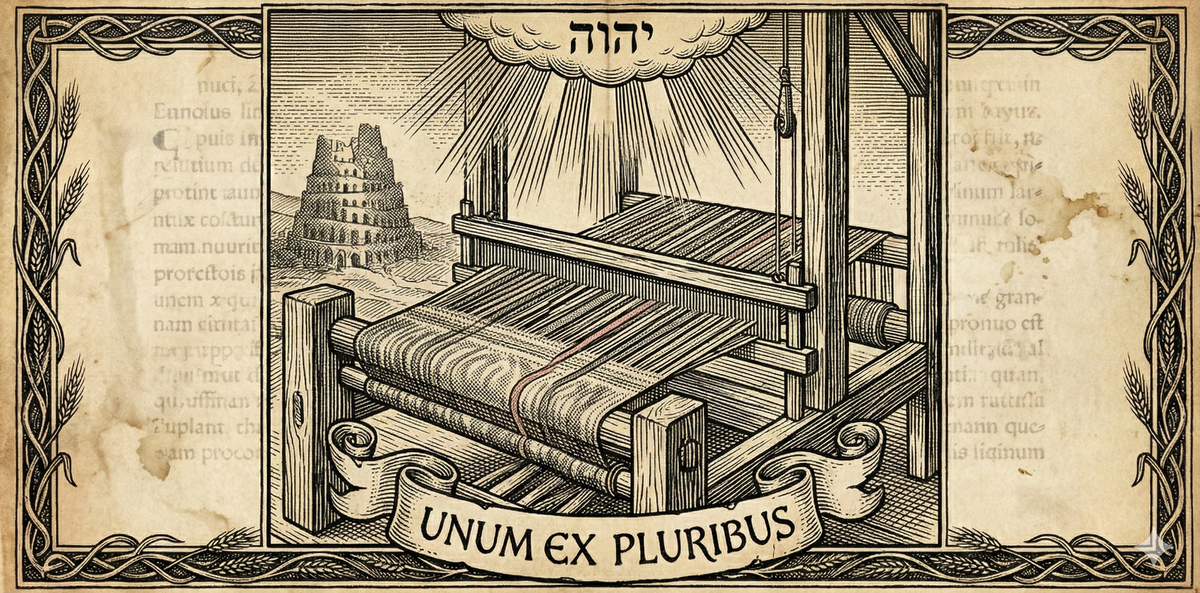
Genesis 11 gives us Babel — that woeful, regretful moment when a united humanity pooled its hubris and tried to build a ladder into the heavens, as if the creature could ascend into the realm of the Creator by sheer architectural ambition. One could argue GOD saved them from themselves; they'd certainly have begun to suffocate as they entered the higher reaches of our atmosphere where oxygen thins to nothing (a rather practical limit on human pride).
GOD's response was to confuse their language and scatter them across the earth. And from that scattering, people groups formed. Nations arose. Ethnic identities crystallized over centuries and millennia.
But here's what's remarkable: the text barely explains any of it. You hear of these groups arising and making themselves known in various times and contexts — Hittites, Amorites, Cushites, Egyptians — but the text provides almost nothing about how they came to develop the unified social identities, cultural identities, and civilizational identities they eventually carried. It just happened in the background of the biblical narrative, so to speak. GOD fractured humanity at Babel, and the rest unfolded in His providence without much commentary.
That silence is instructive.
Compare it to what Scripture does develop at length: the distinction between man and woman. Genesis devotes careful, detailed attention to the creation of male and female — their complementary design, their respective callings, their relational architecture. Paul returns to it repeatedly. Jesus Himself references it directly. The gender distinction receives manifold more biblical real estate than ethnicity; many, many times more. That's not an exaggeration, it's a straightforward observation about where GOD placed His emphasis.
So...ethnic distinction? It's acknowledged and it's real. But the scriptural weight assigned to it is, frankly, minimal.
The One Line in Revelation
Fast forward to the consummation of all things. Revelation 7:9 gives us the great multitude: "a great multitude that no one could count, from every nation, tribe, people and language, standing before the throne and before the Lamb."
Yes, GOD preserves ethnic distinction in eternity, and that's significant. But notice that it's practically a footnote. One line; a single descriptive clause in a book brimming with cosmic drama, angelic warfare, and the unveiling of GOD's final purposes. The diversity of nations appears as a backdrop to worship, not a centerpiece.
The weight we give ethnic distinction is considerably more than that which GOD gives it. That's no argument for colorblindness; it's an observation about divine proportion. He made the distinctions. He preserves them. And He treats them as a background condition of providence, not as foreground category of identity.
Acts 17:26 confirms the framework: "From one man he made all the nations, that they should inhabit the whole earth; and he marked out their appointed times in history and the boundaries of their lands." All for His purposes. Sovereignty acknowledged. And then, remarkably, not much else. No elaborate taxonomy of which nations are nobler. No special recognitions. No designated months. He appointed it, and it is what it is.
Providence Without Pride
So what does "black history" look like, rightly viewed and properly weighted?
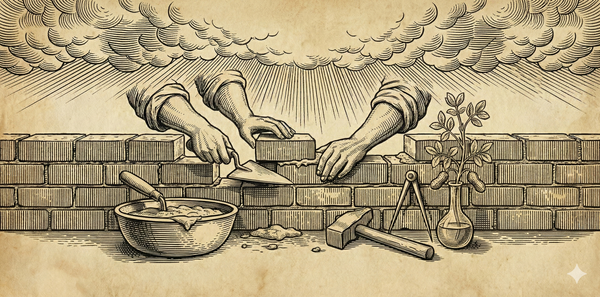
It looks like a layer, an ingredient, a thread in the broader fabric — not a separate garment requiring its own closet. The builders who actually built — Washington, Carver, Reeves, Taylor — didn't build as black men seeking black recognition. They built as men, full stop, whose particular providential circumstances included darker hues of skin. They weren't celebrating because they were black. They were contributing as people who happened to be black. That distinction matters more than it might first appear.
"Black is a thing," as I've said before, "but it is not the king." It's real. It's providential. No one is accidentally anything — GOD made a blue-black man blue-black and a freckled redhead freckled and red, and neither happened by mere genetic accident. In the outworking of His providence, those hues and features developed precisely as He intended. "I praise you because I am fearfully and wonderfully made" — and that fearful, wonderful making includes the skin tone He chose for you, whatever it may be.
But acknowledgment of providence is not the same as elevation to primacy. Jesus is LORD of your blackness — and your whiteness, and your everything else-ness — because He is LORD of all. That's not a statement about racial pride. It's a statement about divine sovereignty over every dimension of who you are, including the dimensions the culture has made its target of obsession.
The move in several Western countries to specially categorize minority groups within their borders — granting special recognitions, special accommodations, special months — has been, I would argue, the wrong move. We've seen the fruit of it here in the United States: not the exaltation of a people but their ruination. Hagiography of an ethnic group simply because that group had it rough in certain periods is not honor. It's patronization dressed in good intentions.
A Footnote in a Much Larger Story
Black history is — and I hesitate even to complete the sentence, because the very act of defining it as something separate perpetuates the problem.
But if pressed: black history is human history. It's the story of image-bearers made by a sovereign GOD, scattered at Babel, appointed to their times and places, some of whom endured terrible evils and many of whom built remarkable things — not because of their melanin but because of the imago Dei that no amount of oppression could erase.
That story doesn't need a month. It doesn't need special handling. It needs what all good history needs: honest telling, faithful integration into the broader narrative, and the theological humility to recognize that GOD Himself apparently considered ethnic distinction worth about one line in the final chapter.
I think we should take the hint.